
Last updated September 22, 2026
Level 1 sweep and inspection to the NFPA 211 annual standard - flue, crown, cap, and flashing checked and photographed
Chimney sweep logs do not sweep chimneys. They loosen some creosote - which then falls where a brush and vacuum still have to collect it.
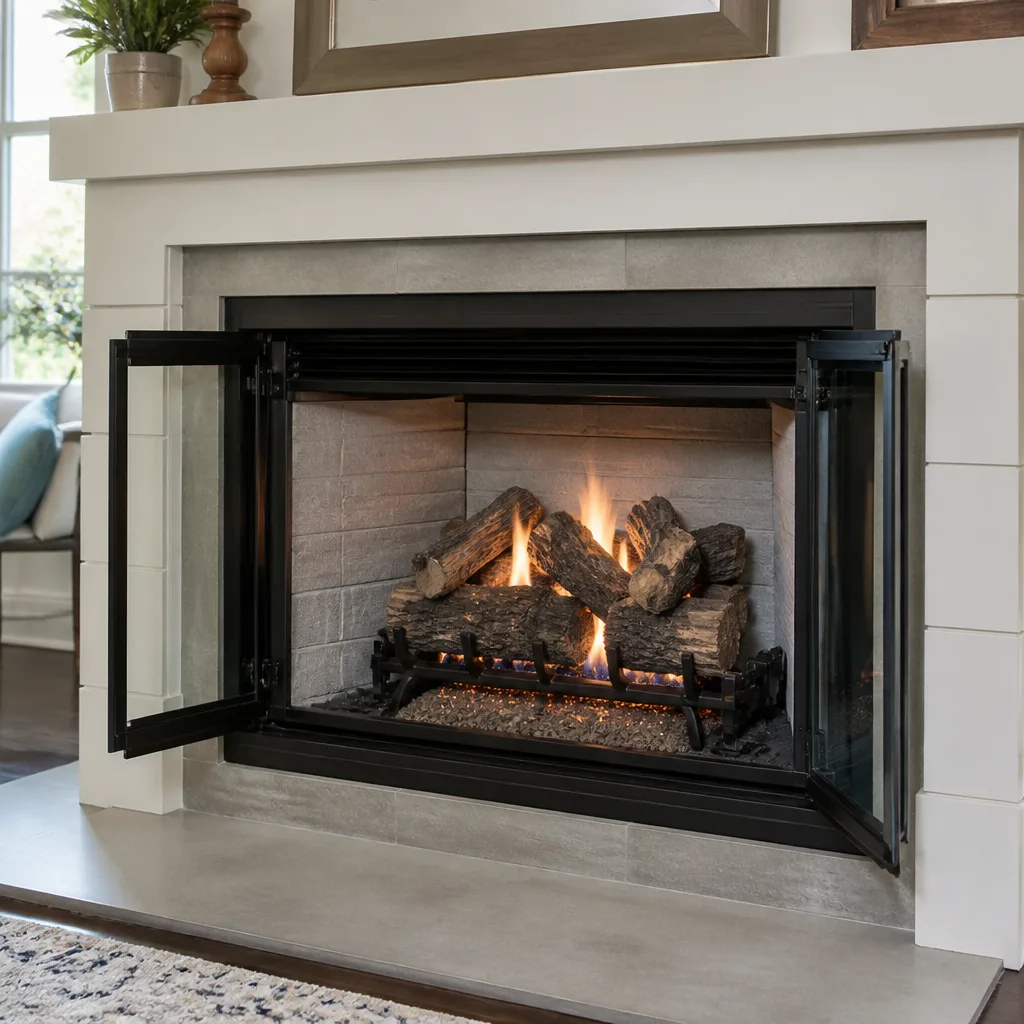
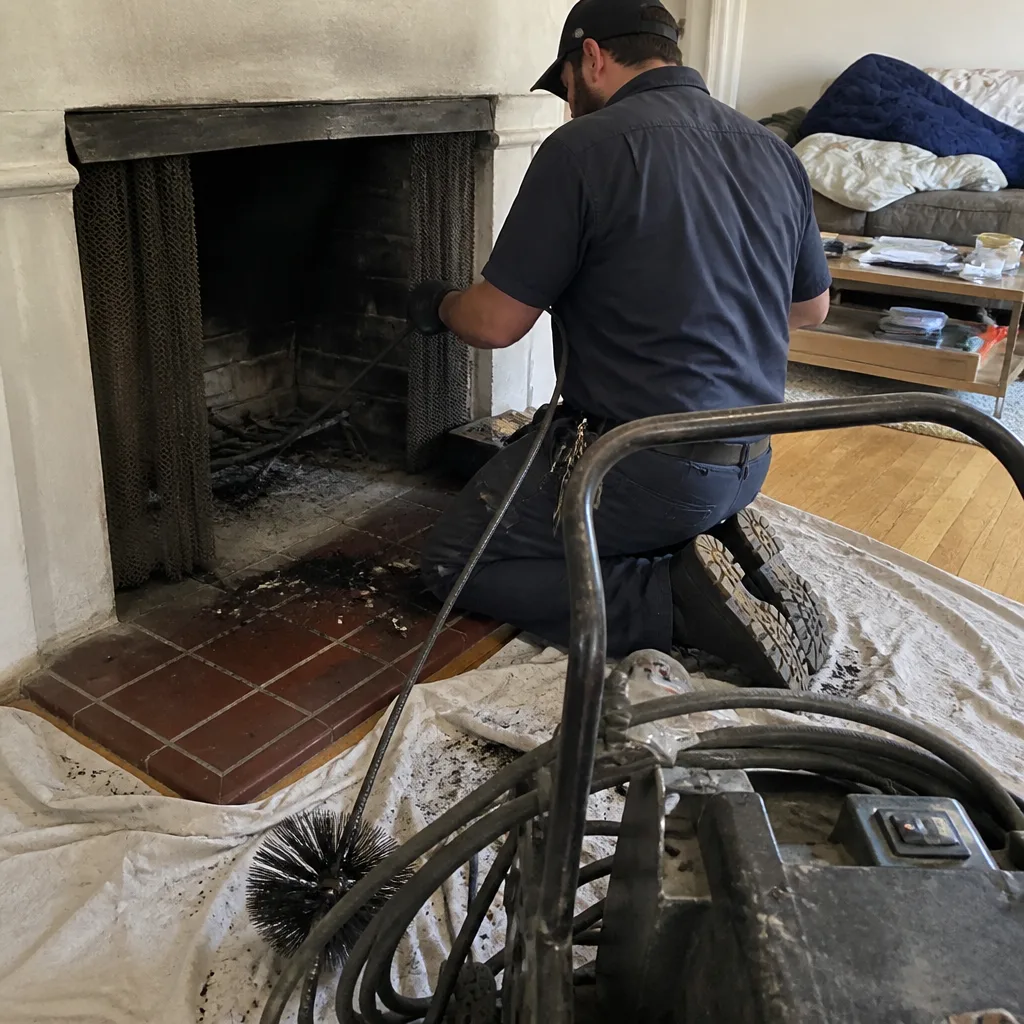 Before
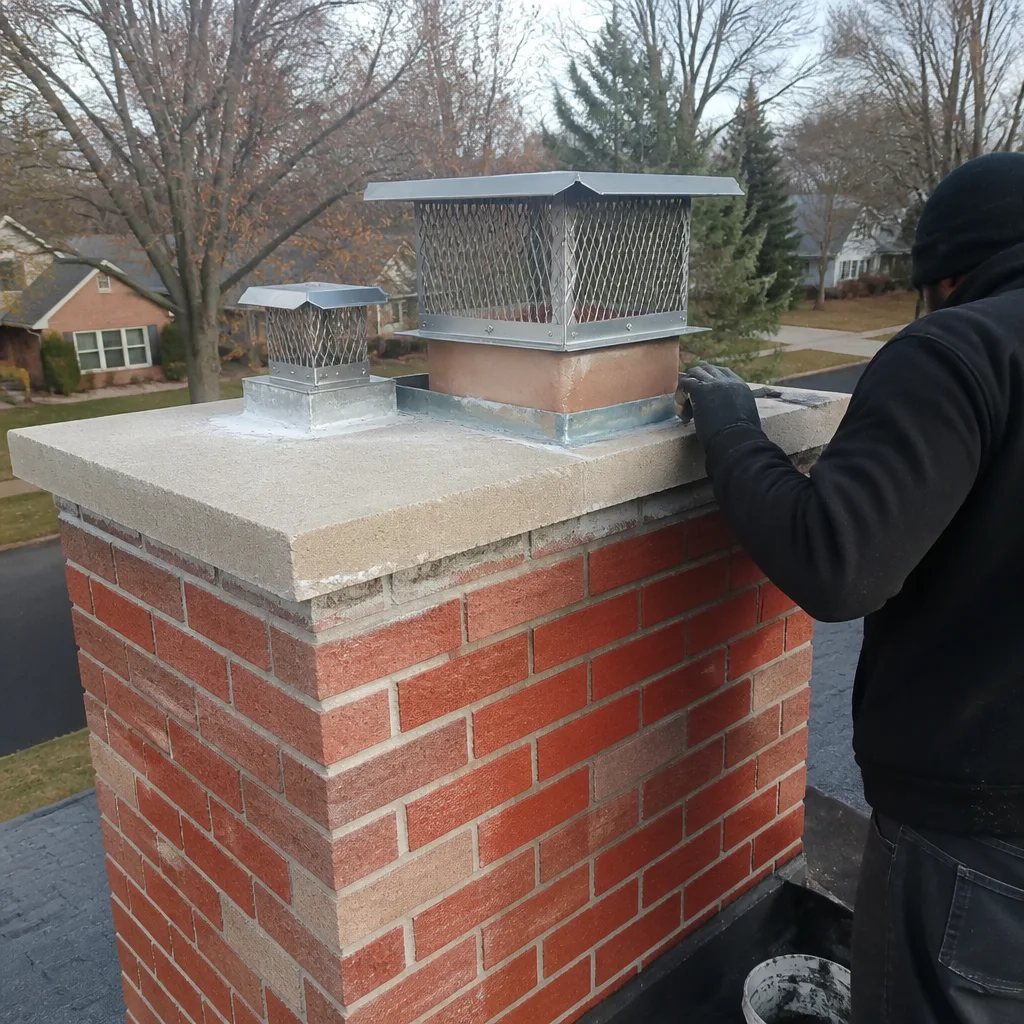 After
After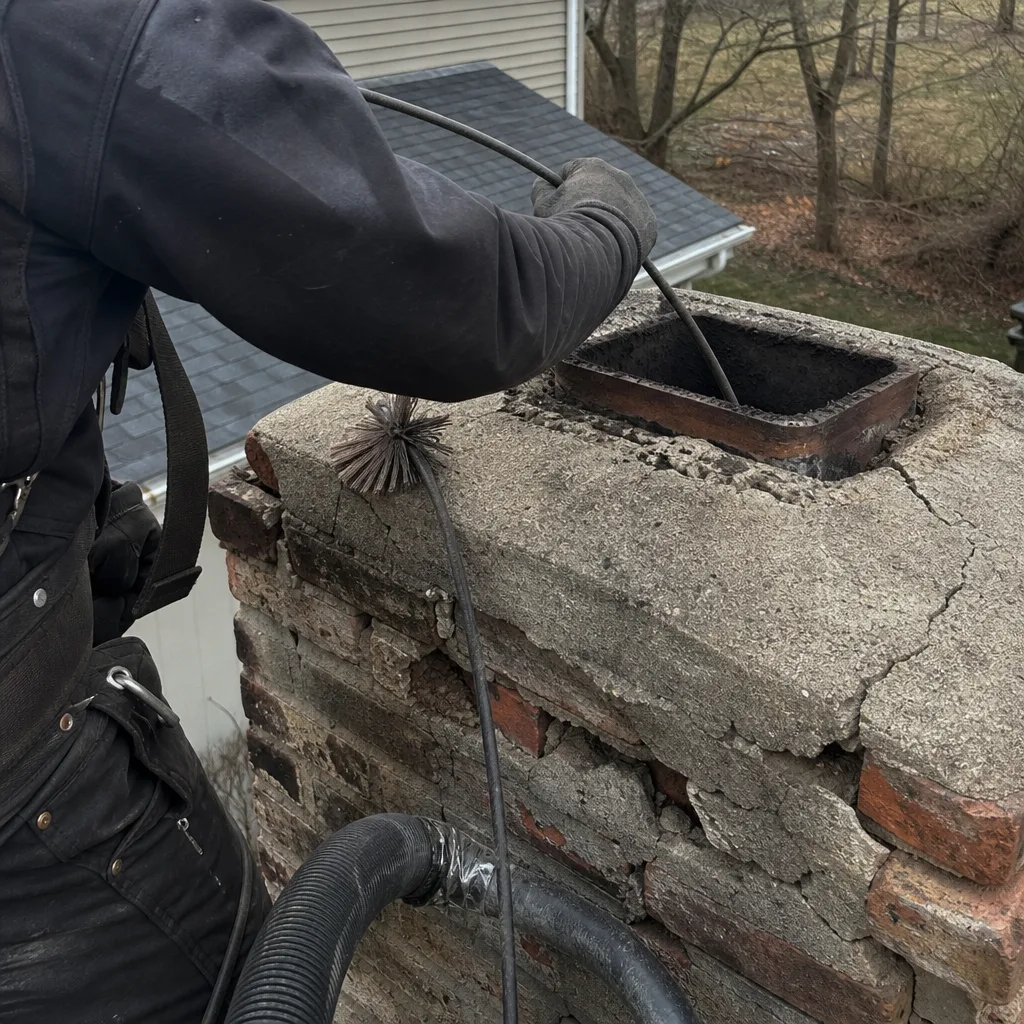 Before
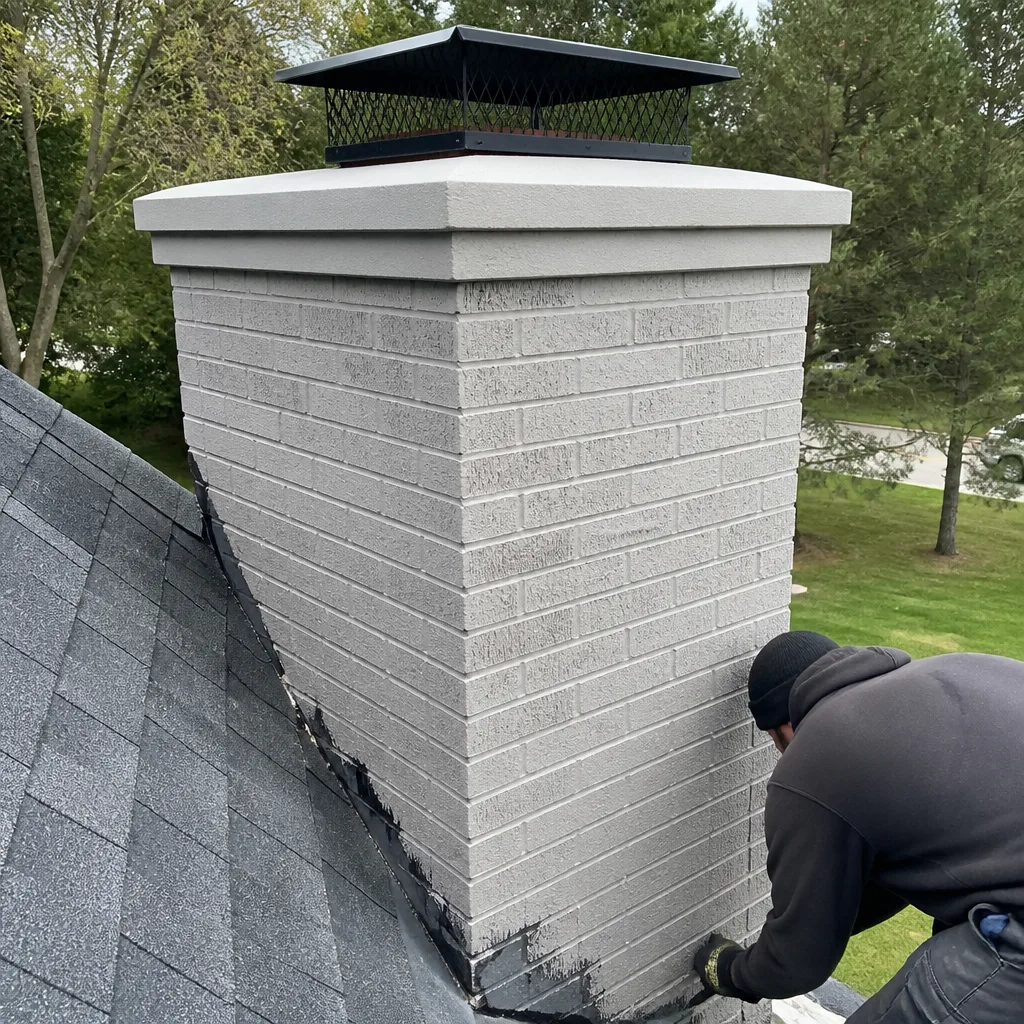 After
After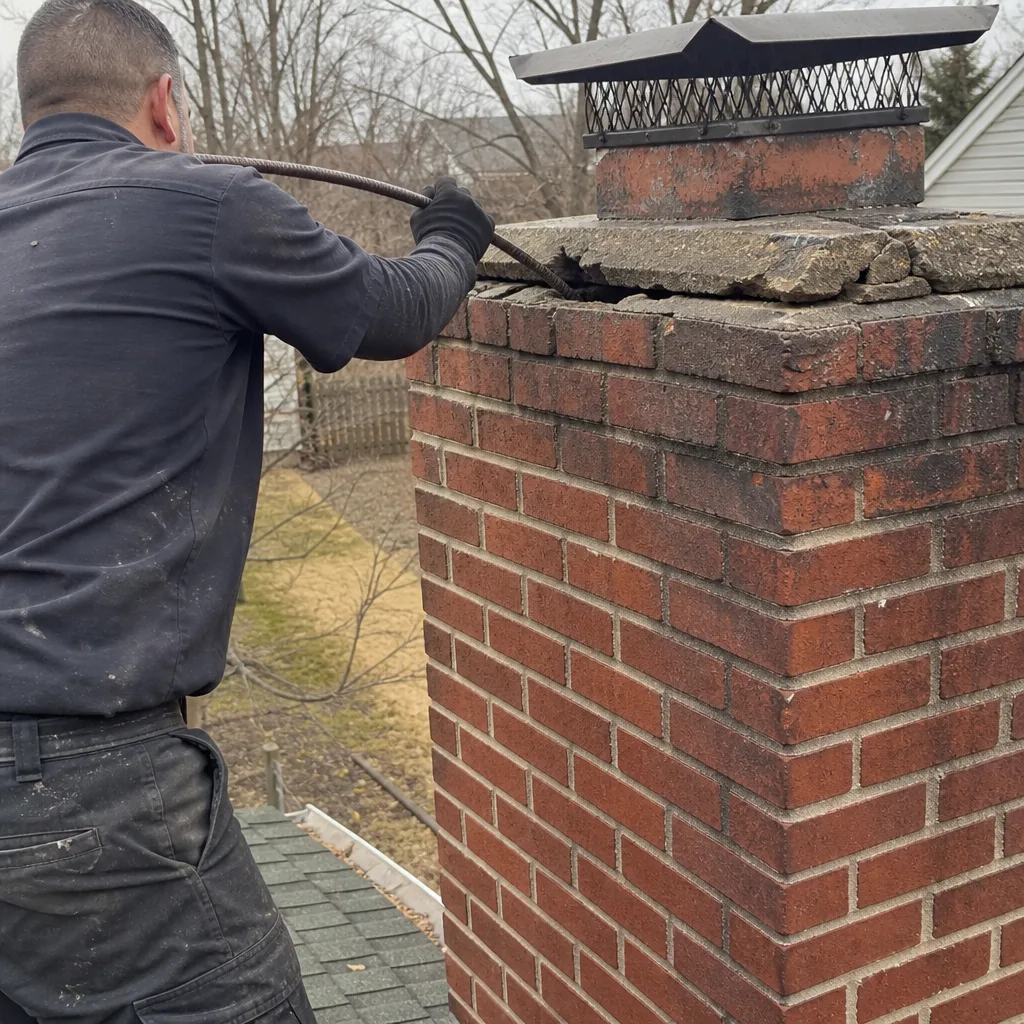 Before
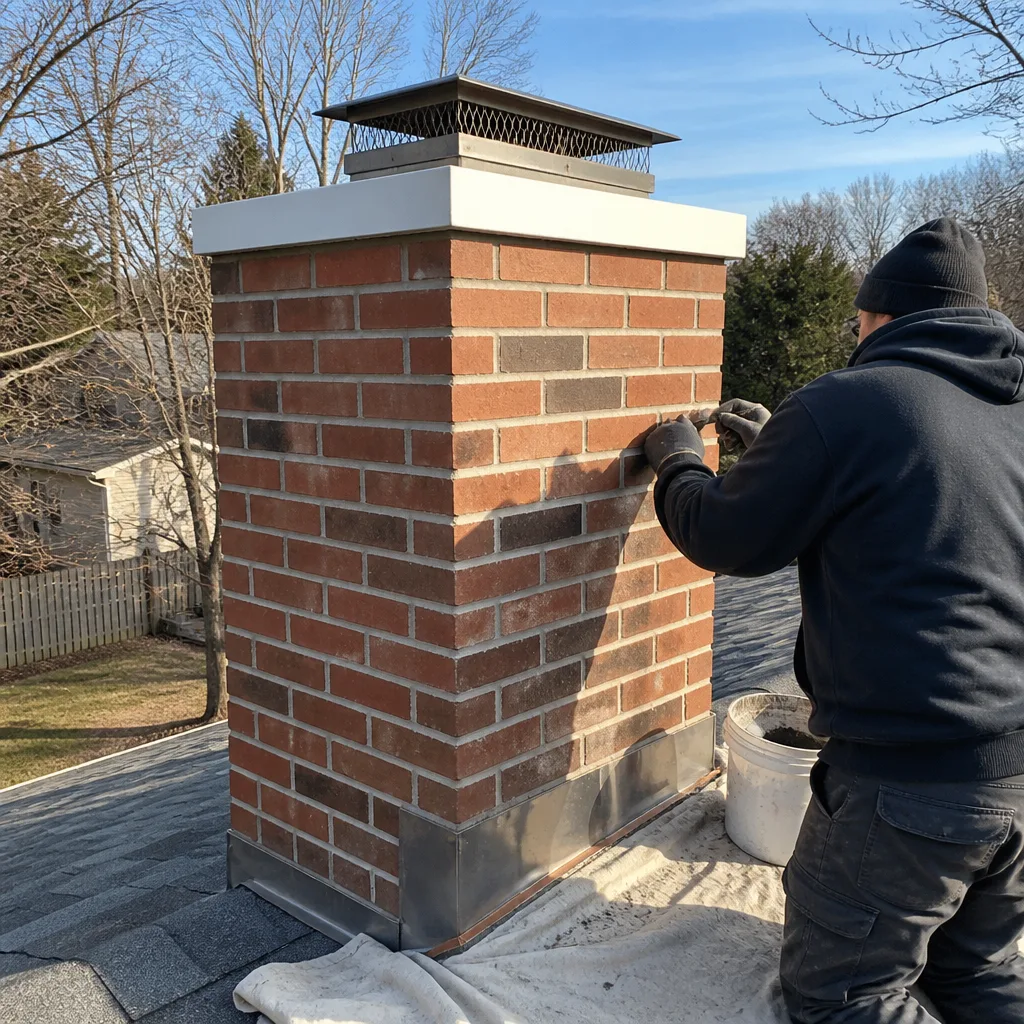 After
AfterDIY vs Professional Chimney Cleaning: The Downers Grove Homeowner’s Decision Guide
A $45 chimney brush kit will remove light creosote deposits just as effectively as a professional sweep - but it won’t produce the written liner condition report your insurer will ask for if you ever file a smoke or fire claim. In Downers Grove, where winters push fireplaces hard from November through March and many homes in neighborhoods like Fairview Station and Lester date to the 1960s and 70s, the real question isn’t whether you can brush your own flue. It’s what you’re taking on when you do: the documentation gap, the liability exposure, and the conditions you can’t see from the firebox. This guide draws the line at what DIY physically accomplishes versus what only a documented professional inspection covers.
Quick Answer
DIY chimney cleaning can safely remove Stage 1 (dry, flaky) creosote from straight, single-story flues if you use the correct brush size and follow NFPA safety protocols. It cannot produce camera documentation of liner integrity, mortar joint condition, or creosote staging that insurance companies, home buyers, or fire investigators require. For Downers Grove homeowners, the decision hinges on whether you need a service record with evidentiary weight - and whether your creosote has hardened past what brushing alone can remove.
Table of Contents
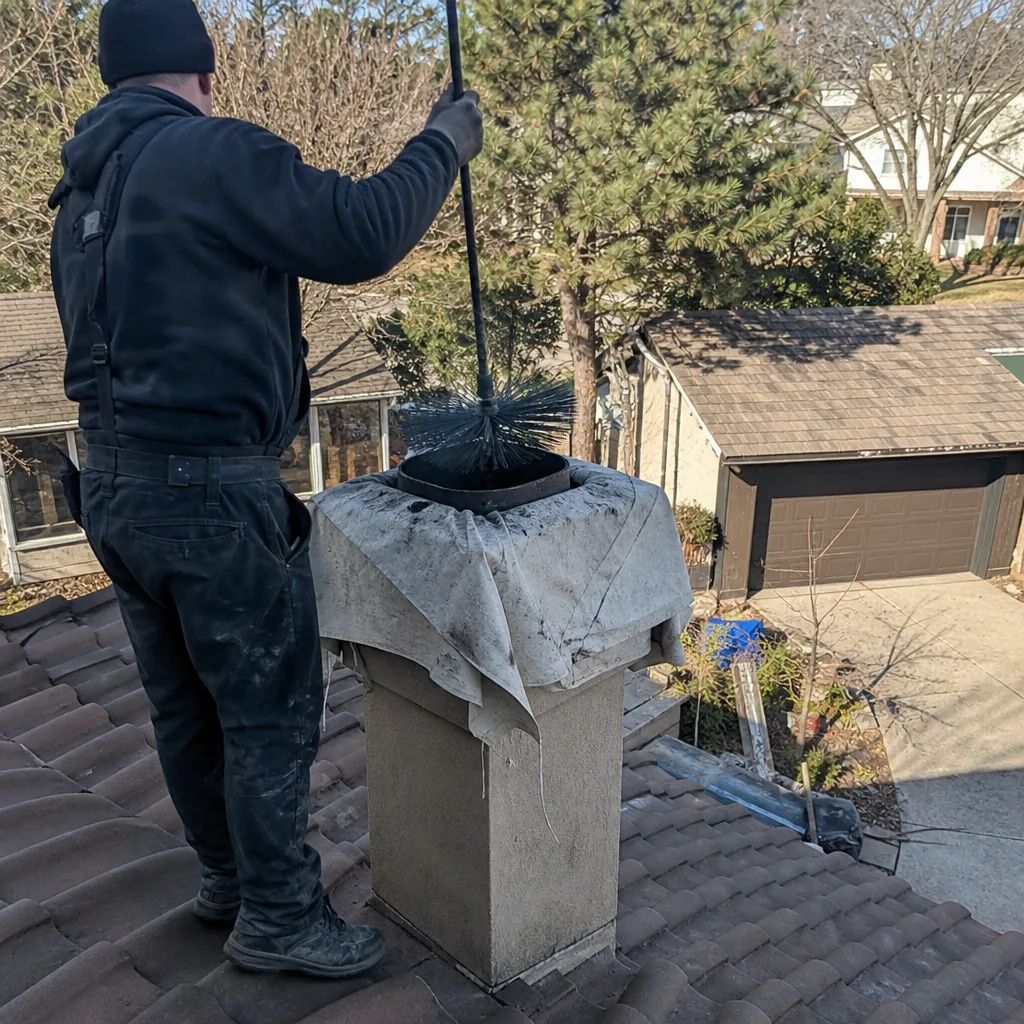
- What DIY Actually Accomplishes (And How to Do It Right)
- What DIY Cannot Do: The Hard Limits
- The Documentation Gap: Insurance, Liability, and Resale
- Identifying Creosote Stages: When Brushing Stops Working
- True Cost Comparison: DIY vs Professional in Downers Grove
- Downers Grove-Specific Factors: Climate, Codes, and Common Conditions
- Common Mistakes to Avoid
- When to Call a Professional
- Frequently Asked Questions
- The Bottom Line
BeforeAfterWhat DIY Actually Accomplishes (And How to Do It Right)
Let’s start with what works. A homeowner with a straight flue, a single-story run, and Stage 1 creosote can achieve a mechanically clean surface using basic equipment. We’ve seen it done competently in Downers Grove ranch homes with short, vertical flues and no offsets. The brush action is identical whether the arm turning the rods belongs to a certified sweep or a careful homeowner.
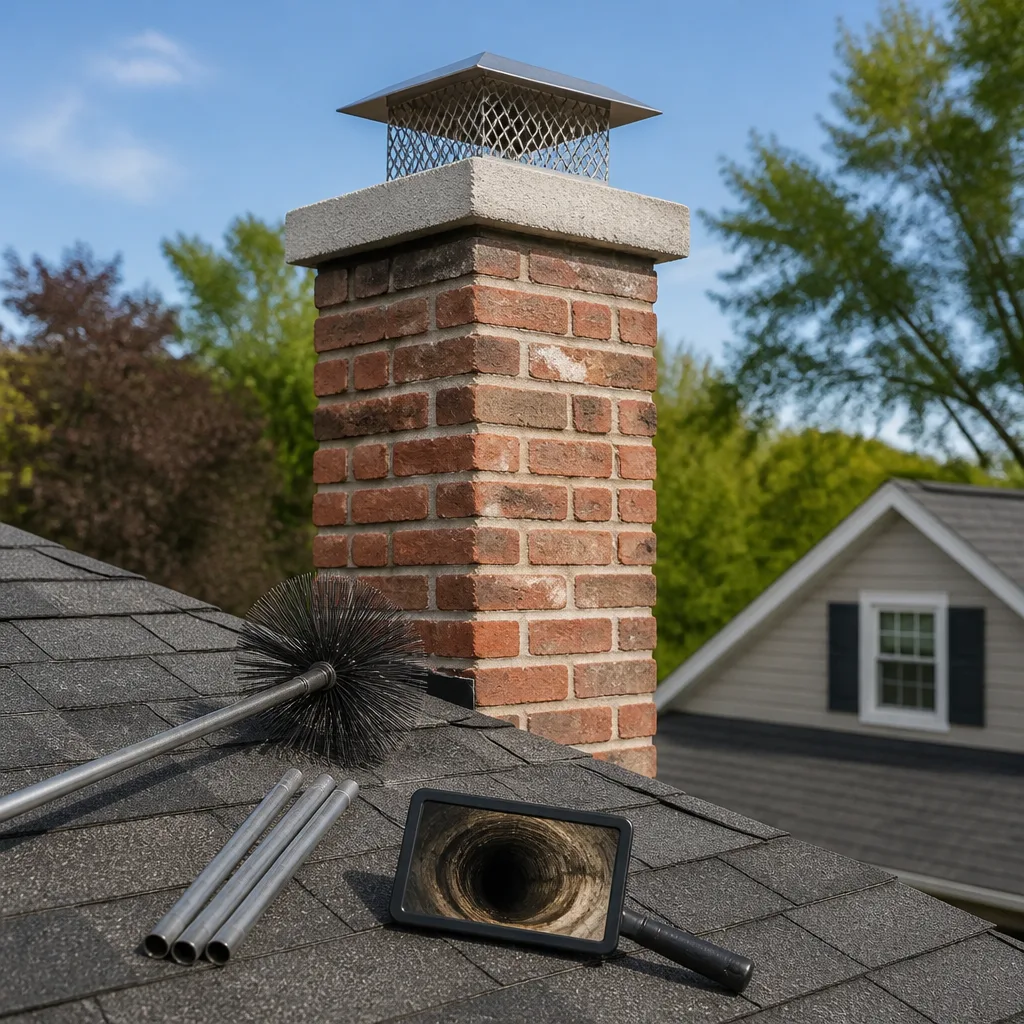
The critical variable is brush sizing. A brush too small skims the flue walls and leaves deposits that accelerate future buildup. A brush too large binds against the liner and can crack clay tiles or damage stainless steel. Here’s the sizing method we use:
- Measure the flue opening at the top and bottom. Rectangular flues are measured by interior width and depth; round flues by interior diameter.
- Select a poly or wire brush that measures 1/4 to 1/2 inch larger than the flue dimension. For a 8″ x 12″ clay flue, use an 8.5″ x 12.5″ brush.
- Count your rods - you’ll need enough length to reach the top of the flue plus 3 feet of working margin. Standard rods are 3 feet each.
- Protect the firebox with a sealed drop cloth; debris falling past a damper can damage gas logs or stain masonry.
- Brush from the top down when safely accessible, or from the bottom up using a mirror to verify full-wall contact.
- Inspect the brush after each pass. Heavy loading indicates significant buildup; clean the bristles before continuing.
This process removes dry, flaky Stage 1 creosote effectively. It does not remove Stage 2 (spongy, tar-like) or Stage 3 (glazed, hardened) deposits. It does not inspect anything. And it produces no record.
The equipment cost is straightforward: a quality brush and rod set from Emberly Chimney Cleaners Downers Grove home suppliers like Copperfield runs $45-$85. Add $20 for a drop cloth, $15 for a basic inspection mirror, and $25 for a respirator rated for fine particulate. Total first-year outlay: $105-$145. Amortized over five years of annual cleaning, the per-sweep equipment cost drops to roughly $21-$29.
What DIY Cannot Do: The Hard Limits
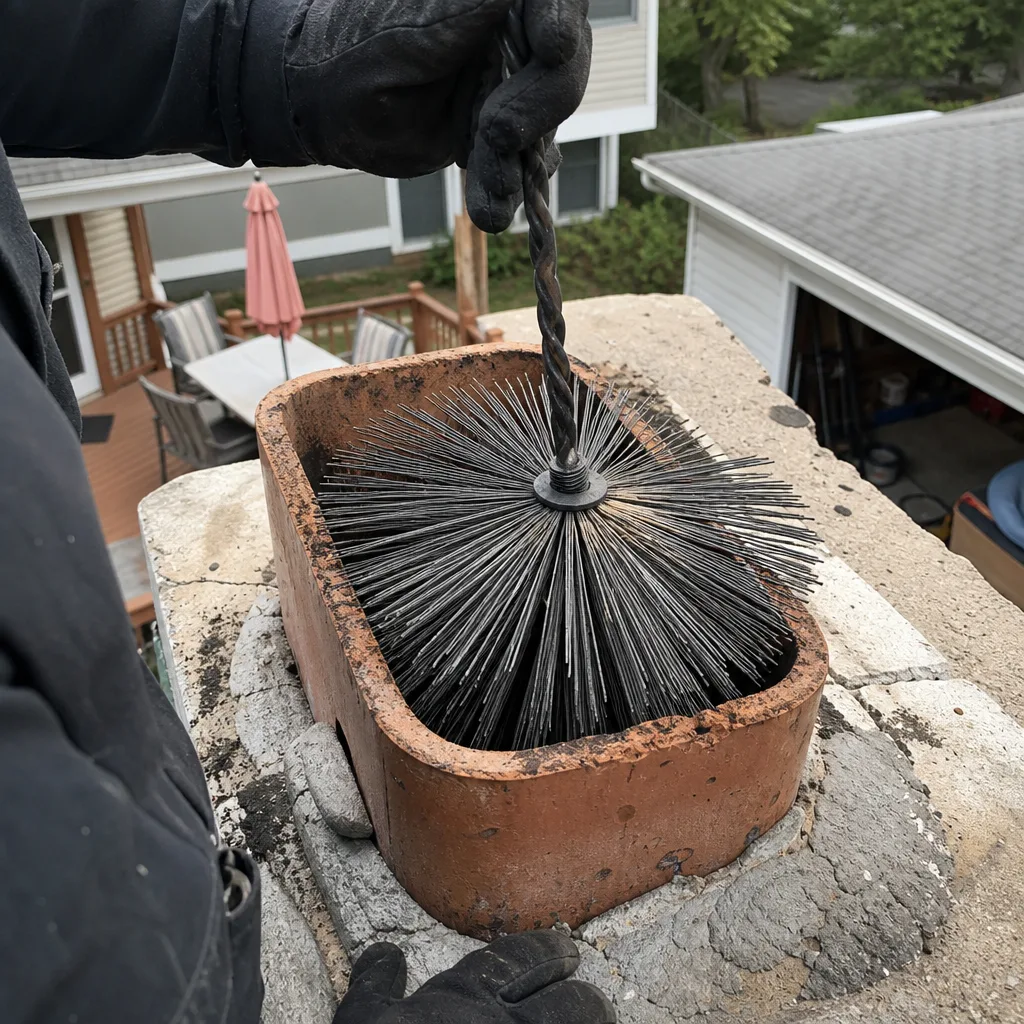
Physical cleaning is only one component of chimney maintenance. The NFPA 211 Level 2 inspection - the standard we established as default practice in 2009 and later codified as Clause 4 of the Haven Standard - includes fourteen distinct evaluation points that no brush kit can address. Here are the hard limits that DIY cannot cross regardless of skill or equipment investment.
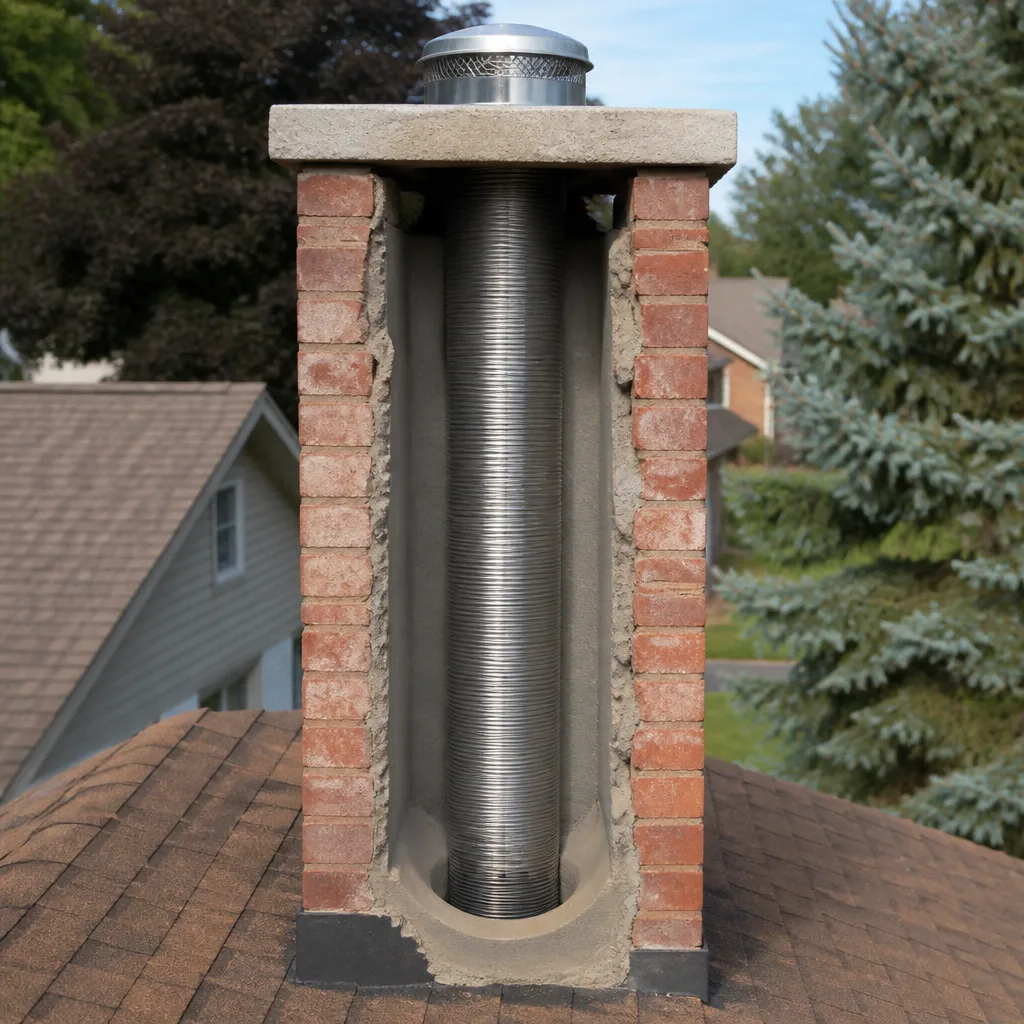
Camera inspection of liner integrity. A chimney liner, whether clay tile, stainless steel, or cast-in-place, develops cracks, gaps, and deterioration that are invisible from the firebox. In Downers Grove homes built during the 1960s and 70s, we’ve documented clay tile shifts from freeze-thaw cycling, stainless steel liner corrosion from condensing gas appliances, and mortar joint erosion that opens gaps between tiles. Only a camera lowered the full flue length reveals these conditions. A mirror and flashlight from the firebox shows perhaps the bottom 18 inches; the remaining 15 to 25 feet remain unexamined.
Mortar joint assessment inside the flue. The joints between clay tiles are the structural weak point. When mortar erodes, hot gases and sparks can reach the surrounding masonry, creating pyrolysis risk in adjacent framing. This condition produces no external symptom - no smoke, no odor, no visible change - until it becomes an active hazard. Camera documentation is the only detection method.
Creosote staging beyond visual identification. Stage 2 and Stage 3 creosote require chemical pretreatment before mechanical removal. Attempting to brush glazed creosote fractures the surface without removing the deposit, leaving a rough texture that accelerates future buildup. Worse, aggressive brushing can damage the liner surface beneath. Proper staging requires a trained eye and often a moisture meter or scraping tool to test deposit hardness.
Smoke chamber and damper evaluation. The smoke chamber - the area above the damper that funnels gases into the flue - is a common collection point for creosote and a frequent location of construction defects. In our Downers Grove inspections, we’ve found corbelled smoke chambers with gaps exceeding code limits, unlined parged surfaces deteriorating into the flue path, and damper assemblies rusted to the point of air leakage. These conditions affect draft performance and safety but require physical access and knowledge of clearance requirements to evaluate.
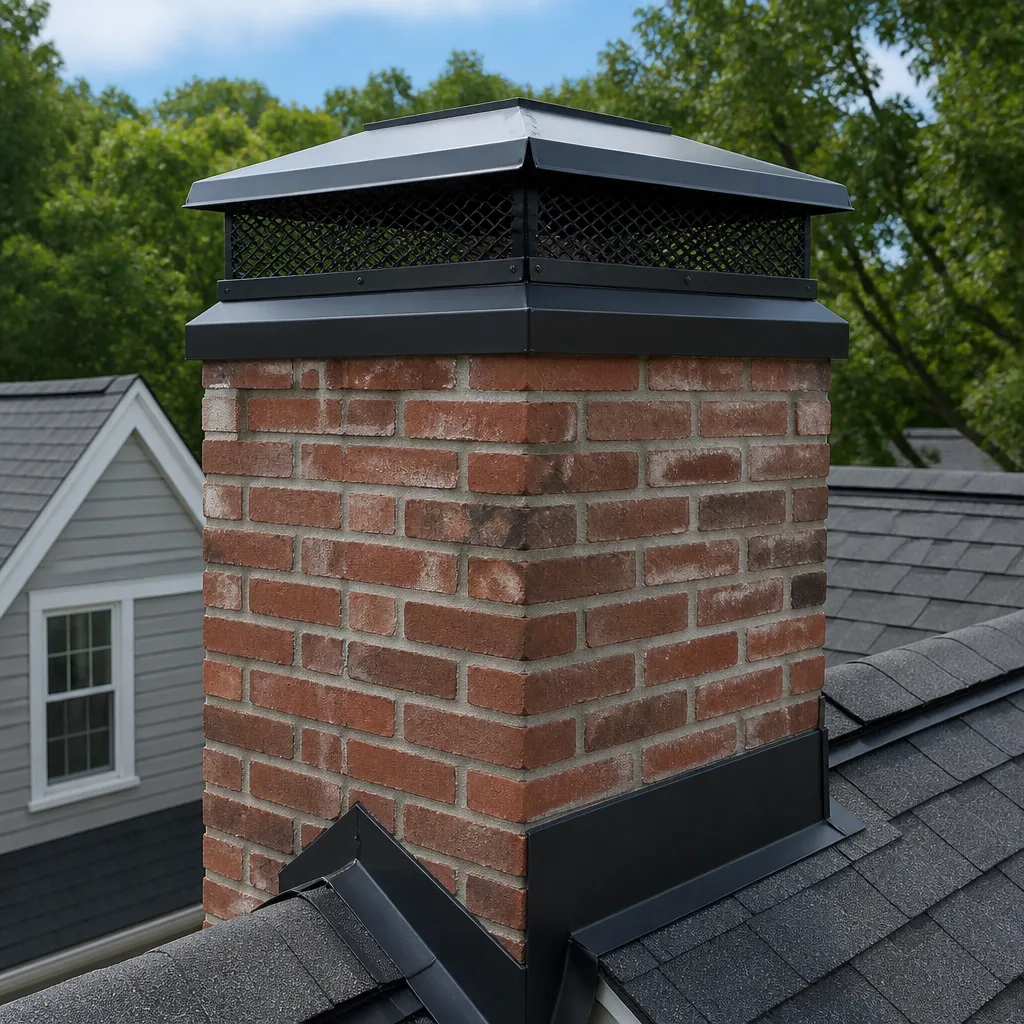
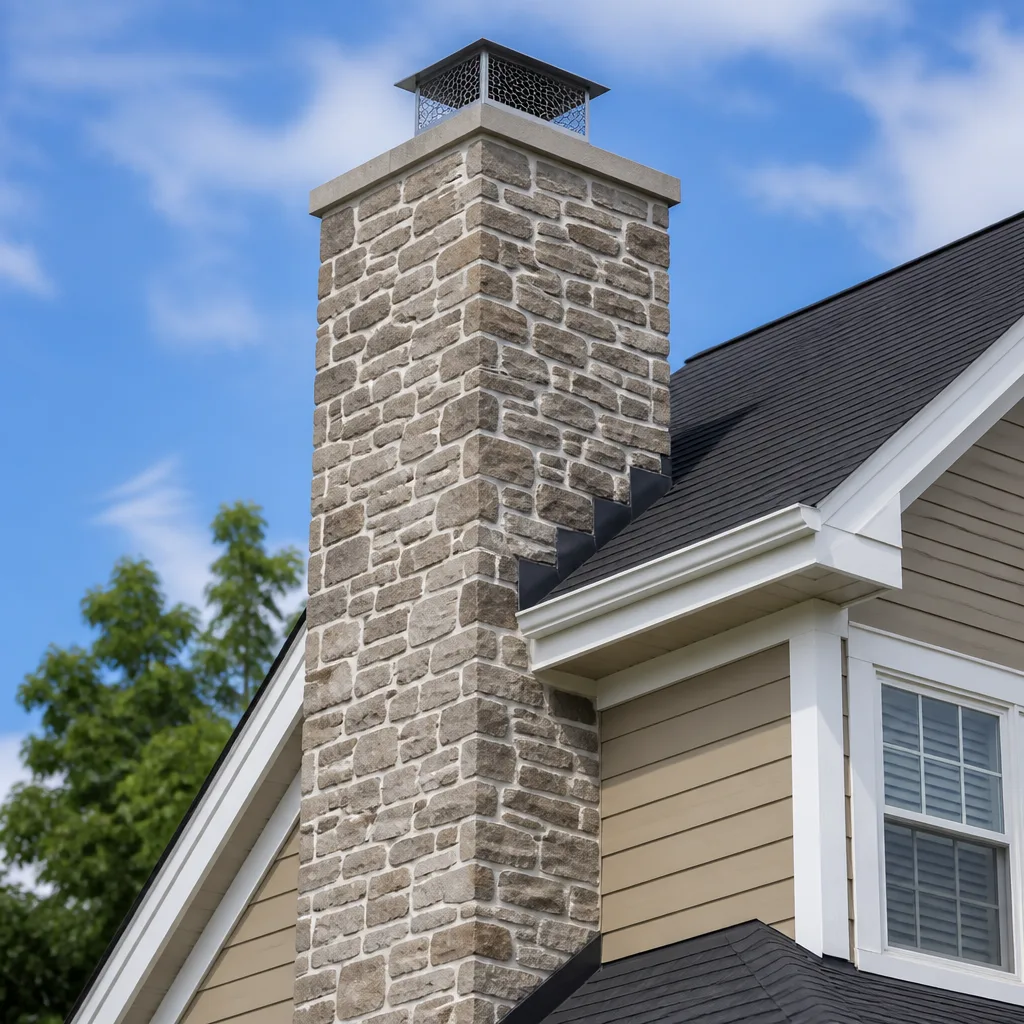
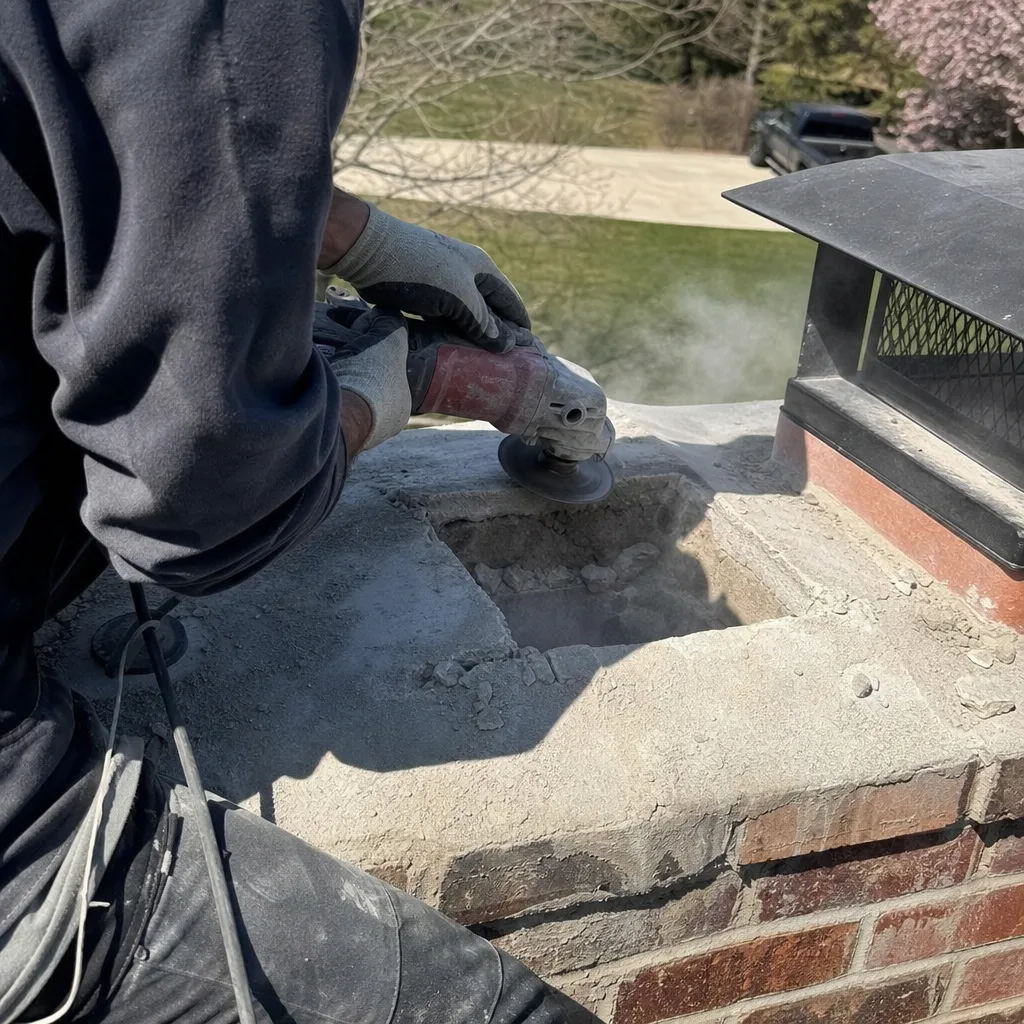
Exterior crown, cap, and flashing condition. Water intrusion destroys chimneys from the top down. Crown cracks, cap displacement, and flashing separation allow moisture into the masonry system, triggering freeze-thaw damage that we’ve observed extensively in Downers Grove’s older neighborhoods. A ground-level inspection misses these conditions; roof-level access is required.
The Documentation Gap: Insurance, Liability, and Resale
This is where the DIY vs professional distinction becomes consequential. A clean flue and a documented safe flue are not the same thing, and the difference matters in three specific scenarios.
Insurance claims. After a chimney fire or smoke damage event, insurers routinely request service records. A DIY cleaning produces no timestamped, third-party documentation of flue condition. The homeowner’s testimony - “I cleaned it myself last fall” - carries no evidentiary weight. We’ve been called to document conditions after fires in Downers Grove homes where the insurer denied coverage based on lack of professional inspection records. In one Fairview Station case, a homeowner with seventeen years of self-reported DIY cleaning faced a $34,000 smoke damage claim denial because no independent party had ever verified liner integrity.
Real estate transactions. Downers Grove’s housing market moves quickly, and buyers increasingly request Level 2 inspection reports. A seller who can produce a dated photo record, written scope, and warranty documentation from a recognized provider has a negotiating advantage. A seller who offers “I maintained it myself” invites buyer suspicion, price reduction requests, or demands for professional inspection at seller expense - often on a compressed timeline that limits provider choice.
Fire investigation. In the event of a structure fire with chimney involvement, fire marshals and insurance investigators examine maintenance history. Professional records with photo documentation establish due diligence. DIY records, even meticulously kept, lack the independence that investigators value. The liability exposure extends beyond the immediate property to potential neighbor damage in attached or close-set housing configurations common in Downers Grove’s older districts.
The Haven Standard’s Clause 4 requirement - a documented photo record on every job - exists precisely because we recognized this gap in 2009. Every Chimney Sweep in Downers Grove we perform generates timestamped images, written condition assessment, and a scope-of-work record stored for customer access. This is not an upgrade or add-on. It is the baseline documentation that transforms a cleaning into a defensible service record.
Identifying Creosote Stages: When Brushing Stops Working
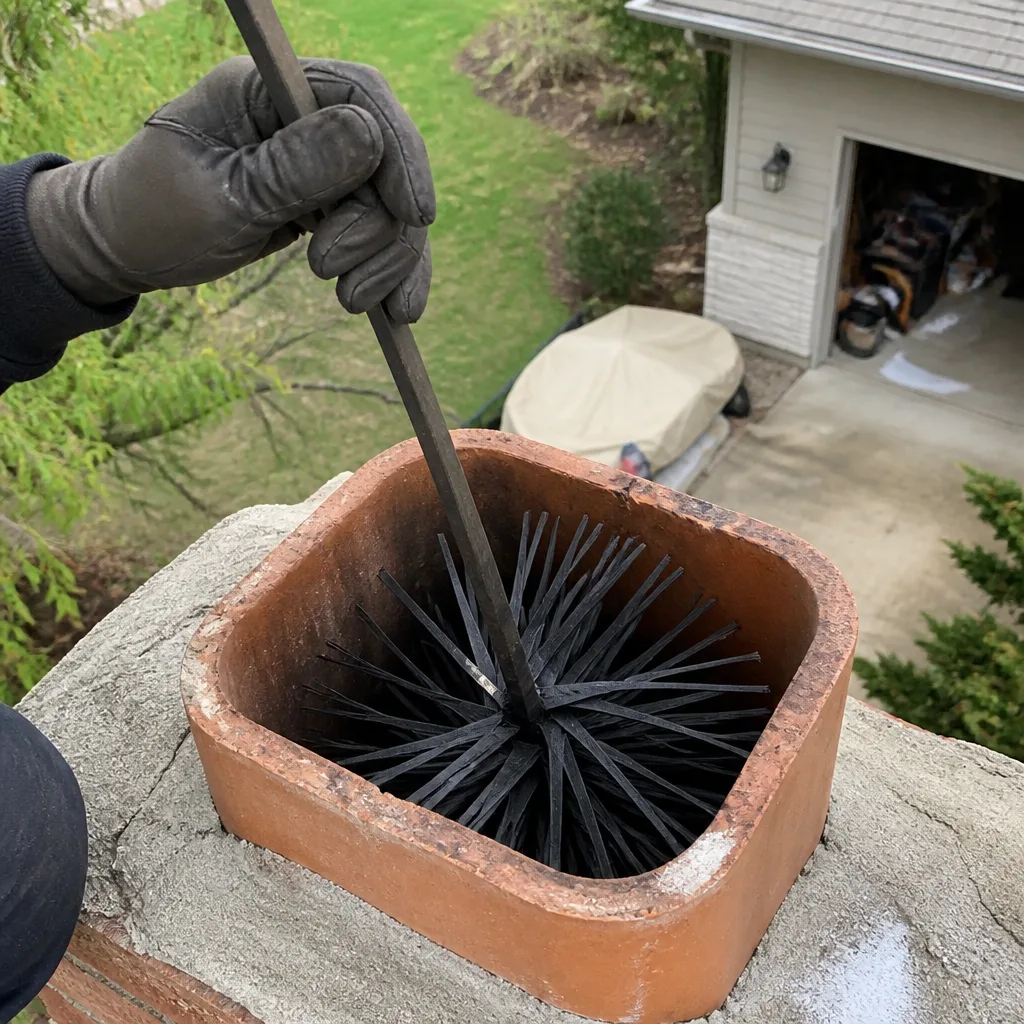
Creosote progression determines whether DIY cleaning is appropriate or potentially damaging. Misidentifying the stage is the most common error we correct in Downers Grove homes where homeowners attempted self-maintenance.
Stage 1: Dry, flaky, sooty. The deposit brushes off easily, leaving a clean liner surface. Color ranges from black to brown; texture resembles coffee grounds or fine ash. This stage results from complete combustion with dry, seasoned hardwood burned hot. DIY removal is appropriate with correct brush sizing.
Stage 2: Spongy, tar-like, sticky. The deposit has begun to condense and polymerize. Brushing smears it; aggressive brushing drives it into liner pores. Color is dark brown to black; texture resembles thick syrup or soft tar. This stage indicates incomplete combustion - burning wet wood, restricted air supply, or cool flue temperatures from exterior chimneys in cold climates. Chemical treatment with a magnesium-based modifier is required before mechanical removal. DIY brushing at this stage risks liner damage and incomplete cleaning that masks the underlying problem.
Stage 3: Glazed, hardened, glossy. The deposit has fully pyrolized into a dense, enamel-like coating. It cannot be brushed off. Attempting to do so with standard equipment wastes time and risks liner damage. Removal requires rotary mechanical cleaning with specialized chains or whips, often preceded by days of chemical treatment. In Downers Grove, where extended heating seasons and frequent temperature inversions can produce cool flue conditions, we’ve documented Stage 3 buildup in as little as two seasons of incorrect burning practice.
Identification method: Wear gloves and eye protection. Reach into the flue above the damper and scrape a small sample with a putty knife or similar tool. Stage 1 flakes away cleanly. Stage 2 smears and strings. Stage 3 requires significant pressure to chip, and the surface beneath remains coated. When in doubt, assume Stage 2 or higher and seek professional evaluation - misidentification risks both safety and equipment damage.
True Cost Comparison: DIY vs Professional in Downers Grove
Honest pricing requires honest accounting. Here’s our Chimney Cleaning Cost Breakdown: The Downers Grove Homeowner’s Reference for 2026 for both approaches in the local market.
DIY Cost Breakdown
- Brush and rod set (Copperfield or similar): $45-$85
- Drop cloth and protective sheeting: $20
- Respirator (N95 minimum, P100 preferred): $15-$35
- Inspection mirror and light: $25
- Ladder or roof access equipment (if brushing from top): $0-$150 (amortized)
- Time investment: 3-5 hours including setup, execution, and cleanup
- Risk factor: Liner damage from incorrect brush sizing ($800-$3,500 repair); incomplete cleaning leading to accelerated buildup; personal injury from roof work or rod handling
Five-year DIY total (equipment amortized, no damage incidents): $145-$330 + 15-25 hours labor
Professional Cost Breakdown
- Level 2 inspection with camera scan and photo documentation: $199-$289
- Sweeping service (if needed based on inspection): $149-$219
- Combined inspection and sweep package: $289-$389
- Time investment: 60-90 minutes (homeowner present for first 15, then free to resume normal activity)
- Deliverables: Written scope, written price before work, timestamped photo record, 365-Day Done Right Promise warranty
The professional cost includes documentation that the DIY approach cannot produce. For homeowners who will sell within five years, have insurance concerns, or simply value their time at more than $25-$40 per hour, the professional route often costs less in total economic terms. For homeowners with straight flues, correct burning practices, and no near-term transaction plans, DIY Stage 1 removal is economically rational - provided the limits are understood and respected.
Materials for any needed repairs - DuraFlex liners, HeatShield resurfacing, Gelco caps - are sourced through our Haven buying network to maintain price honesty. We do not markup materials separately from labor; the written price covers the complete scope.
Downers Grove-Specific Factors: Climate, Codes, and Common Conditions
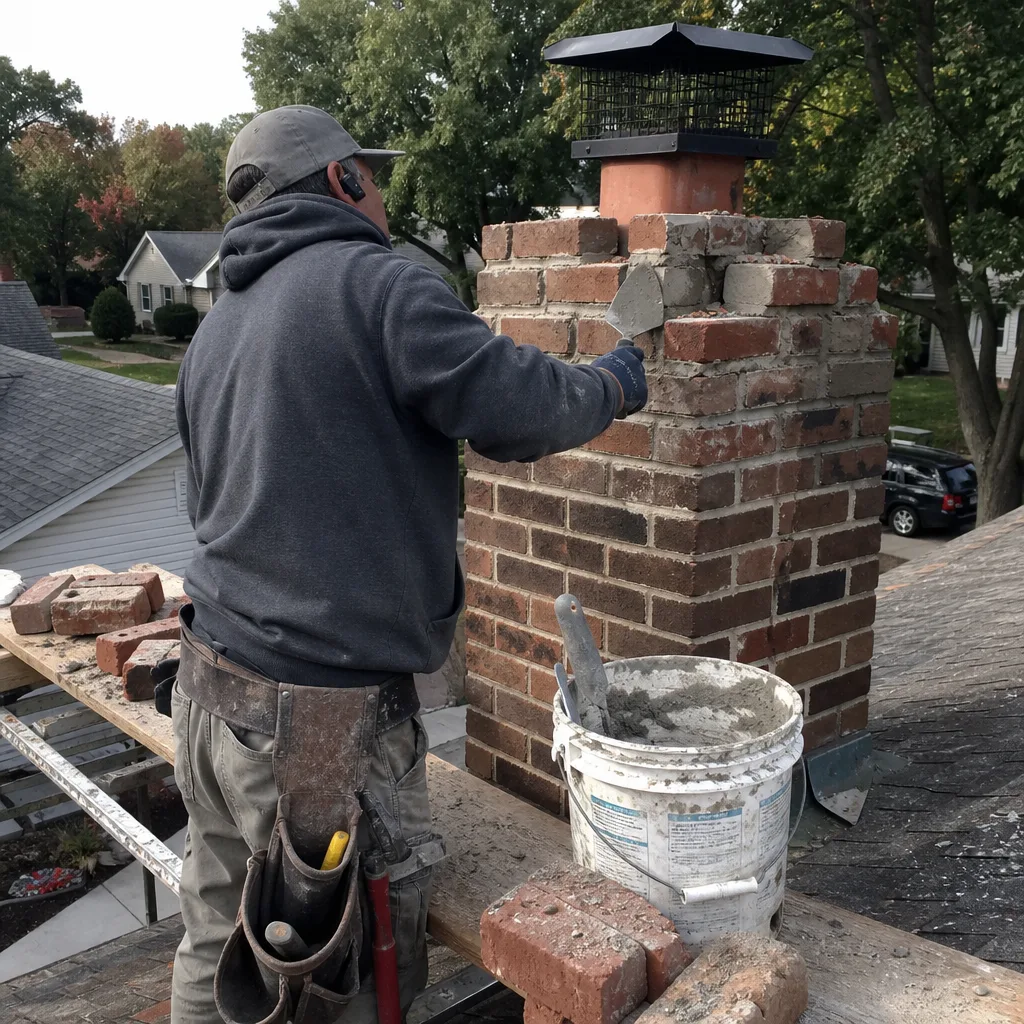
Local context shapes chimney maintenance needs in ways that generic advice misses.
Climate and burning season. Downers Grove experiences approximately 150 heating-degree days annually that push fireplaces into regular use from late October through early April. The freeze-thaw cycle is particularly aggressive: temperatures fluctuate across the 32-degree threshold an average of 60+ times per winter. This cycling accelerates crown cracking and mortar deterioration in exterior masonry. We’ve replaced crowns in the Lester neighborhood where thermal movement opened gaps exceeding 1/4 inch in a single season.
Common construction eras. Homes in Fairview Station, Lester, and the older sections near downtown Downers Grove often feature unlined brick chimneys or clay tile liners installed in the 1960s-1980s. These liners have exceeded their typical 50-year service life and show accelerated deterioration. A homeowner brushing their own flue may encounter tile fragments without recognizing their significance - the camera inspection that accompanies our Chimney Repair in Downers Grove service identifies when tile debris indicates systemic liner failure.
Local code and permit context. Downers Grove follows the 2021 International Residential Code with amendments. Chimney repairs involving liner replacement, structural rebuilding, or venting modifications require permits through the Village’s Community Development Department. Professional contractors carry this permit cost and coordination; DIY repairs that bypass permitting create title and insurance complications at sale. Our written scope specifies when permitting is required and handles submission as part of project management.
Neighborhood fuel patterns. Downers Grove’s mature tree canopy provides abundant hardwood - oak, maple, hickory - that burns well when seasoned 18-24 months. But we’ve observed homeowners burning construction debris, treated lumber, and unseasoned wood collected from parkway drops. These practices produce Stage 2 and 3 creosote rapidly and introduce chemical contaminants. A DIY cleaner may not recognize the abnormal deposit color and texture that indicates improper fuel use.
Insurance market specifics. Several carriers writing policies in DuPage County have tightened chimney documentation requirements since 2022, particularly for homes with wood-burning appliances as primary or significant secondary heat sources. We’ve worked directly with adjusters who now request NFPA 211 inspection records with photo documentation for renewal eligibility. DIY maintenance, however diligent, does not satisfy these requirements.
Common Mistakes to Avoid
- Using a brush sized by guess rather than measurement. In Downers Grove’s varied housing stock, flue dimensions range from 6″ round gas inserts to 13″ x 13″ clay tile assemblies. A 7″ brush jammed into a 6″ stainless liner damages the liner; a 6″ brush in an 8″ tile leaves two inches of uncleaned surface.
- Brushing from the bottom without verifying top clearance. Rods can separate or jam in offsets. We’ve extracted broken rod sections from flues where homeowners lost connection points in unseen transitions.
- Missing the smoke chamber. The area above the damper collects creosote heavily but is awkward to access. DIY cleaners often stop at the flue base, leaving significant deposit volume that continues to off-gas and deteriorate air quality.
- Assuming no visible debris means clean. Stage 3 creosote can present as a thin, dark glaze that appears superficial. Scraping with a tool reveals the true depth. We’ve found 1/4-inch glazed deposits that homeowners mistook for “just discoloration.”
- Neglecting the exterior inspection. Crown cracks in Downers Grove often develop between annual cleanings. A flue can be mechanically clean while water intrusion destroys the chimney structure around it. Roof-level examination is essential.
- Burning improper fuel between cleanings. Seasoned hardwood is the only appropriate fuel for standard fireplaces. Construction waste, painted or treated lumber, and unseasoned softwood produce accelerated, abnormal creosote that resists standard cleaning methods.
- Documenting nothing. Even DIY cleaners should photograph the flue before and after, record dates, and note brush size and technique. Most do not - and when documentation is needed, the record does not exist.
When to Call a Professional
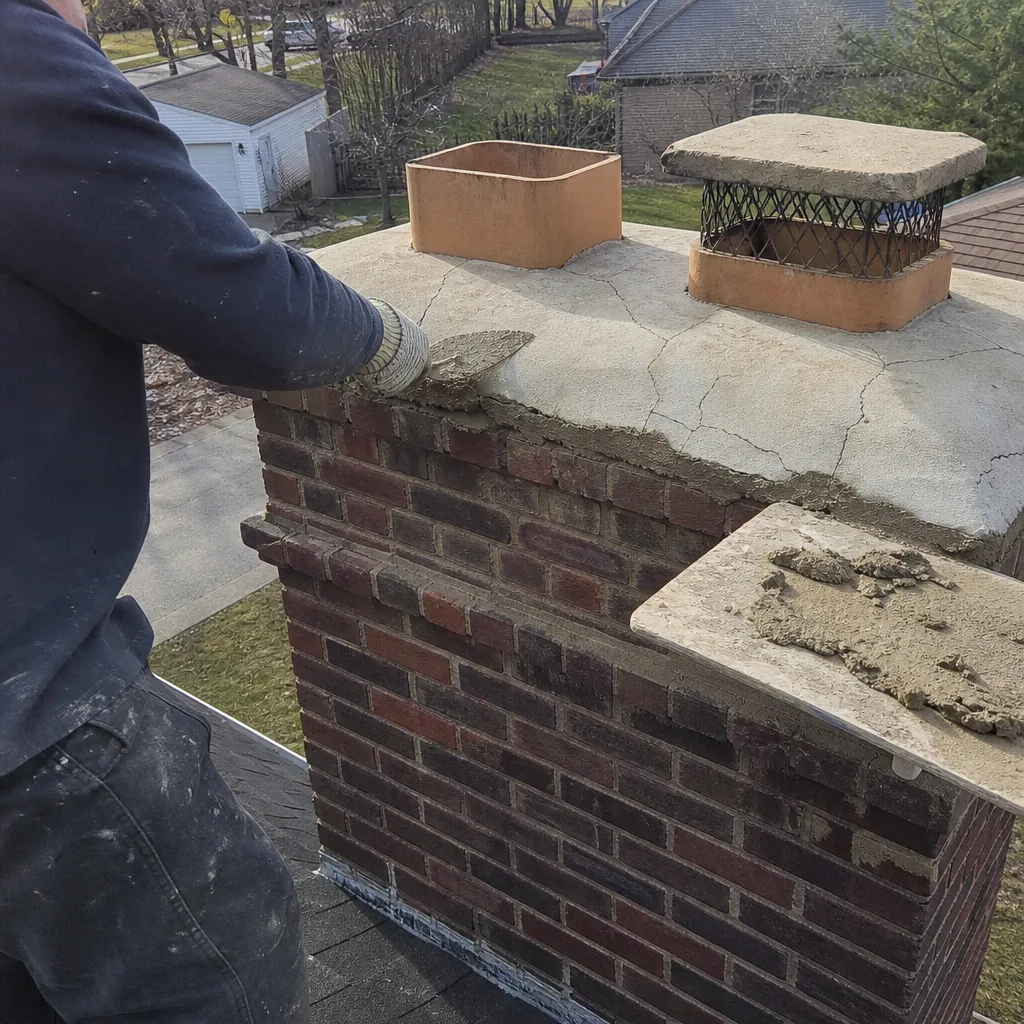
Call a professional when creosote staging exceeds Stage 1, when the flue has offsets or transitions that complicate brushing, when the home is approaching sale or insurance renewal, or when any of the following conditions appear: visible liner damage, mortar debris in the firebox, water staining on interior chimney faces, draft problems or smoke spillage, or any combustion appliance change (stove insertion, fireplace conversion, liner addition).
Emberly Chimney Cleaners Downers Grove offers free estimates in Downers Grove - call (331) 253-4980. Every estimate includes a written price, written scope, and explanation of what documentation you’ll receive. Our 365-Day Done Right Promise applies to all work, and we provide free second opinions on any competitor’s written quote.
Frequently Asked Questions
A Level 2 inspection with camera scan and photo documentation runs $199-$289; sweeping service if needed adds $149-$219, with combined packages at $289-$389. These prices include the documented photo record required by Haven Standard Clause 4, not as an optional add-on. Call (331) 253-4980 for an exact quote - estimates are free.
Your policy will not be voided by DIY cleaning alone, but a claim involving chimney fire or smoke damage may be denied or reduced without third-party documentation of flue condition. Insurers increasingly request professional inspection records with photo evidence. DIY maintenance without documentation creates a coverage gap that only becomes visible at claim time.
Annual inspection is the NFPA 211 standard for all chimneys, regardless of use level. Sweeping frequency depends on creosote accumulation: typically every cord of wood burned, or annually for regular fireplace users. Downers Grove’s extended heating season and freeze-thaw climate make annual inspection particularly important for exterior masonry condition.
Stage 1 creosote progresses to Stage 2 and 3, becoming progressively harder and more hazardous to remove. Liner damage and mortar deterioration proceed undetected. Water intrusion through crown or flashing defects destroys surrounding masonry. The cumulative effect is higher repair costs, potential insurance complications, and elevated fire risk. In extreme cases, unaddressed liner failure allows combustion gases including carbon monoxide to leak into wall cavities or living spaces.
A liner is needed when inspection reveals cracks, gaps, or deterioration that compromise containment of combustion gases. We do not recommend liner replacement without camera evidence you can see yourself - Clause 4 of the Haven Standard requires this documentation. In many Downers Grove homes with original clay tile liners, localized repair or HeatShield resurfacing can extend service life without full replacement. The written scope specifies exactly what the camera shows and what options address it.
Level 1 is a visual examination of readily accessible portions - what can be seen from the firebox and exterior ground level. Level 2 adds camera inspection of the full flue length, attic and crawl space examination where accessible, and evaluation of all connections and clearances. Level 2 is required at property sale, after chimney fire or seismic event, and upon any appliance change. Emberly Chimney Cleaners made Level 2 the default standard in 2009, before regulators or insurers required it, because visual-only inspection misses conditions that affect safety and documentation value.
The Bottom Line
DIY chimney cleaning has a legitimate place for Stage 1 creosote in straight, accessible flues with correct equipment and technique. It does not produce the documentation that modern insurance, real estate, and fire investigation contexts require. The decision for Downers Grove homeowners is not about capability - it’s about what record you need and what conditions you cannot see. For help choosing, see How to Hire a Chimney Cleaning Contractor in Downers Grove: A Step-by-Step Guide. When documentation matters, when creosote has hardened past Stage 1, or when the flue has offsets, transitions, or age-related wear, professional inspection with camera documentation is the only approach that satisfies the full requirement. The $45 brush kit and the $289 professional service are not competing options for the same job. They are different services with different outputs, and choosing between them means understanding which output your situation demands.
For a free estimate with written price, written scope, and explanation of what documentation you’ll receive, call Emberly Chimney Cleaners Downers Grove at (331) 253-4980. Our 24/7 live phone support means you’ll speak to a person, not a voicemail system. Every job is backed by the 365-Day Done Right Promise and Haven Standard documentation requirements.
Written by Corrine Halstead, Owner at Emberly Chimney Cleaners Downers Grove, serving Downers Grove since 2009. Explore more guides & resources from our team.